Forum - Hull and Fittings - Stays
| Topic | Replies | Latest Post |
|---|---|---|
| Stays | 1 | Fri 02 Oct 2026 07:11:56 |
 Tommy Sun 05 Jul 2026 13:17:27 Tommy Sun 05 Jul 2026 13:17:27 | Cracks are appearing under where the port stays attach to the deck. Does anyone know the depth these anchors go into the hull? Thanks 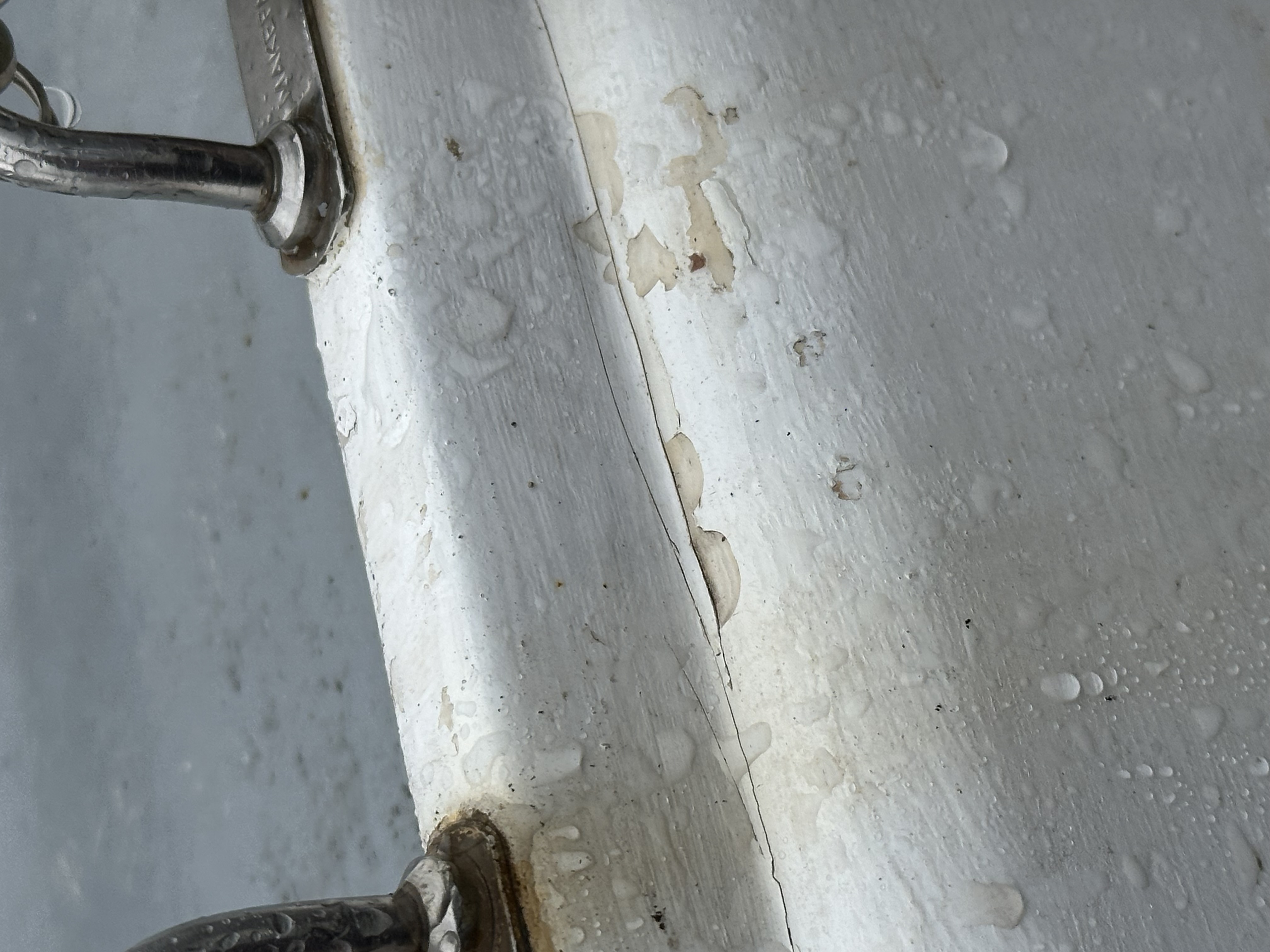 | |
Replies | ||
 Ian & Julie Fri 02 Oct 2026 07:11:56 Ian & Julie Fri 02 Oct 2026 07:11:56 | I’ve started asking AI and it said this. Hope it helps. Yes, these cracks are potentially very serious. In the image, the cracks (crazing/fracturing) are located directly along the toe rail/deck edge right below the shroud chainplate attachments (where the standing rigging holds up the mast). Why This Is a Structural Concern 1. High Tension Loads: The shrouds are under immense upward and sideways tension when sailing, especially when the rig is loaded up on a heel. Cracking right beneath the chainplates indicates that the deck is flexing or lifting under load. 2. Core Delamination or Rot: On trailer-sailers like the Manta 19, chainplates are typically through-bolted with backing plates or tied into an internal bulkhead/knees. Cracks in the gelcoat/fiberglass here often mean the backing structure (plywood core, backing pad, or bulkhead) has either rotted from moisture ingress or softened, causing the fiberglass skin to flex and crack. 3. Risk of Dismasting: If the underlying deck structure or chainplate fixing fails under sail, the shroud will pull free, leading to an immediate mast loss. What to Check (Investigation Steps) Before taking the boat out on the water, you should perform the following checks: The "Tap" Test: Tap around the cracked area on deck with a small plastic hammer or the handle of a screwdriver. A clear, sharp ping indicates solid fiberglass; a dull thump indicates delaminated fiberglass or rotten core beneath. Rig Tension Flex Test: Have someone gently flex or tension the shroud while closely watching the chainplate deck fitting. If you see visible movement or the crack opens/closes, the attachment has lost its structural integrity and is unsafe to sail. Recommended Remediation 1. Do not sail in high winds until the structural integrity underneath is verified. 2. Remove the fittings: Unbolt the chainplate, grind back the cracked gelcoat, and inspect the fiberglass laminate beneath. 3. Repair the core/backing: Replace any rotten backing plywood or soft core with solid GRP/epoxy or high-density marine plywood. Install larger stainless steel backing plates (fender washers or custom plates) to spread the load over a wider area. 4. Re-seal: Rebed the chainplate fittings with a proper marine polyurethane/polyether sealant (such as Sikaflex 291i or 3M 4200) to stop water from leaking back into the deck core. | |

